Keeping a Reading Notebook Without Turning It Into Homework
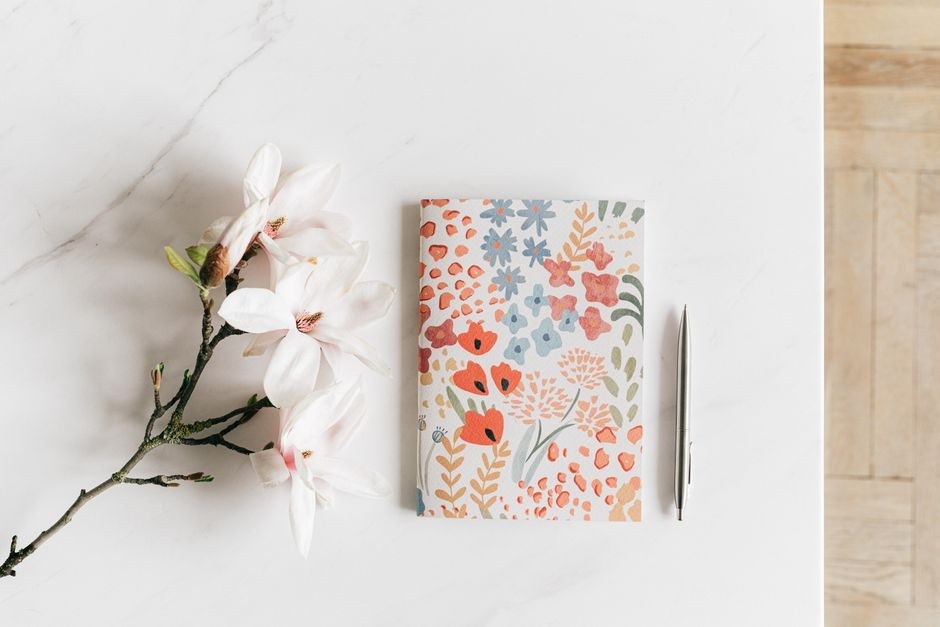
A notebook beside a stack of books can look like the beginning of an ambitious system: summaries, ratings, quotations, indexes, color codes. For some readers, that structure is enjoyable. For others, it quietly changes reading into administration.
A useful reading notebook can be much lighter. Its job is not to prove that you understood a book or to preserve every important point. It is simply a place to catch what you would otherwise forget.
Write only when something pulls you out of the page
Not every chapter needs notes. A sentence, image, argument, or question may be enough to make you reach for the notebook. That moment of interruption is a good filter: if an idea is strong enough to stop you, it is probably worth recording.
Sometimes the note will be a quotation. Often it is better as a reaction: “This explains why the first half felt tense,” or “I disagree, but I can see why the character believes it.” These small responses preserve your encounter with the book, not just the book itself.
Keep entries short
A few lines are usually enough. Write the title and date, then add fragments as you read. Page numbers can be helpful, but they are optional. The notebook should still make sense even if you lend the book away or read a different edition years later.
Short entries also make rereading pleasant. Opening an old notebook should feel like meeting a past version of your attention, not reviewing a filing system.
Leave room for odd connections
Reading rarely stays inside one book. A novel may remind you of a photograph, a conversation, a city street, or a song. Those sideways connections are often the most personal part of the experience, so they belong in the notebook too.
You might draw a quick floor plan from a story, list three books mentioned in an essay, or write down a question to carry into another subject. None of these notes need to be useful in the conventional sense. Their value is that they keep curiosity moving.
Skip ratings if they flatten the experience
Stars and scores are convenient when choosing what to recommend, but they can make complicated books feel oddly final. Instead of deciding whether something was a three or four, try one sentence about the experience: “Beautiful sentences, but I never found the rhythm,” or “I wanted to argue with it for two days.”
That kind of note is more informative when you return later. It remembers texture rather than verdict.
Make the notebook easy to reopen
Use whatever book is already within reach. Avoid saving a particularly beautiful notebook for “serious” reading. The easier it is to write badly, quickly, and without ceremony, the more likely the habit will survive.
A reading notebook works best when it remains secondary to reading itself. It should catch sparks, not collect evidence. Over time, even a sparse notebook becomes a map of changing interests: the questions that keep returning, the writers who lead to other writers, and the moments when a book suddenly connected to life outside the page.